
About the FLIP+ Library
The Project
A global assessment resource library built by educators, for educators.
Project presentation
A collaborative library for educational assessment
The FLIP+ Library is an open-source digital platform where public education institutions share, access and co-develop high-quality assessment content. Built by a consortium of national assessment bodies and supported by UNESCO, it is a collaborative commons, not a commercial product.
The goal: give every education system in the world access to a trusted, evidence-based pool of assessment resources and the community of expertise that comes with it.
Origin & Vision
From a shared challenge to a global community
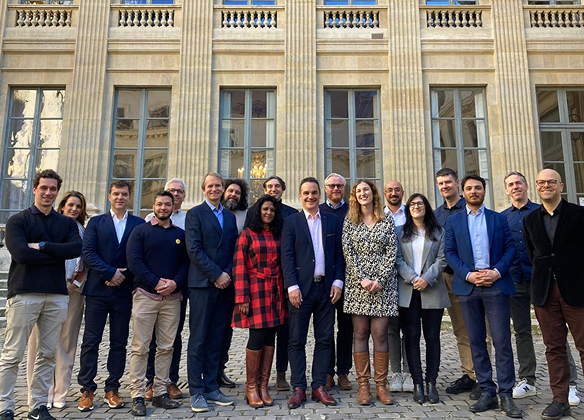
The idea for the FLIP+ Library was born in 2017, when assessment institutions from France, Luxembourg, Italy and Portugal found themselves facing the same challenge: the transition to digital assessment was costly, complex, and being tackled in isolation. Each country was solving problems others had already encountered. The waste was obvious. So was the opportunity. What began as a conversation between four countries became the FLIP+ association in 2019, and since 2023, a working open-source platform accessible to a growing international community.
The FLIP+ Library is not simply a repository. It is a statement of principle. High-quality assessment should not depend on the size of a country’s budget, or on whether its developers happened to see what someone else built five years ago. Knowledge shared is knowledge multiplied.
Our vision for 2025 to 2030 is to expand access, enrich the content pool, improve interoperability, and explore the responsible use of AI, always with human judgment at the centre. The Library belongs to the community that builds it. That is what makes it last.
The FLIP+ Library
What we share
Within the FLIP+ Library, members contribute and access resources created and validated by real public educational institutions.
Assessment content
Validated assessment items (traditional and technology-enhanced formats, QTI-compatible)
Metadata
Rich metadata linking items to curriculum frameworks, education levels, subjects and languages
Psychometric data
Psychometric and usage data from real national assessment administrations
Platform source code
Open-source platform code, modules and technical components
Technical documentation
Technical documentation and integration guidelines (APIs, standards, deployment)
Quality frameworks
Quality and accessibility standards developed collaboratively by Working Group members
Community expertise
Peer expertise exchanged through Working Groups and community events
Our GitLab
The FLIP+ GitLab is where the technical community collaborates on platform code, reviews contributions, and shapes the Library’s future. Open to all FLIP+ members and contributors. Contributing code is a recognised form of in-kind contribution to the association.
Our Working Groups
The FLIP+ Library is built and enriched by our Working Groups. These are the engine of the community, bringing together specialists from member institutions to produce shared outputs, define quality standards, and drive the Library forward. They have the privileged role in shaping the FLIP+ Library’s development, in its early development phase, by helping to define its needs, uses, and priorities. They are consulted regularly to share knowledge, experience and content and success stories.
Mathematics Content
Creates math assessment items for the Library. Emphasizes curriculum alignment, quality, and metadata. Developed the FLIP+ Library framework by comparing national assessments to the UNESCO Global Proficiency Framework.
English Content
Creates English assessment items and evaluates linguistic frameworks, linking them to UNESCO’s Global Proficiency Framework for Reading Literacy. This includes defining metadata tags and technical requirements.
FLIP+ Dev (Technology)
Maintains the open-source platform and manages code contributions and documentation. The Group oversees Google Workspace for all Working Groups and is developing a FLIP+ hub services vision for members, including capacity-building for development tools.
Psychometrics & IRT
Develops quality standards – the minimum psychometric criteria items should meet – and CTT and IRT frameworks, with quality properties that a
Accessibility & Inclusion
Defines accessibility and inclusion standards to meet diverse learner needs. Developing an “Accessibility Box” framework for item quality and building capacity to raise awareness that accessibility enhances library trustworthiness.
AI in Assessment
Covers responsible AI use in assessment development and quality assurance. Builds prototypes like a translation pipeline with agents and collaborates with FLIP+ Dev on hub services architecture.
Join FLIP+
Want to be part of the FLIP+ community?
Become a member and gain access to the FLIP+ Library, our Working Groups, events and a global network of assessment professionals.
Our events
Don’t miss our next webinars and annual event.
 Registration closed
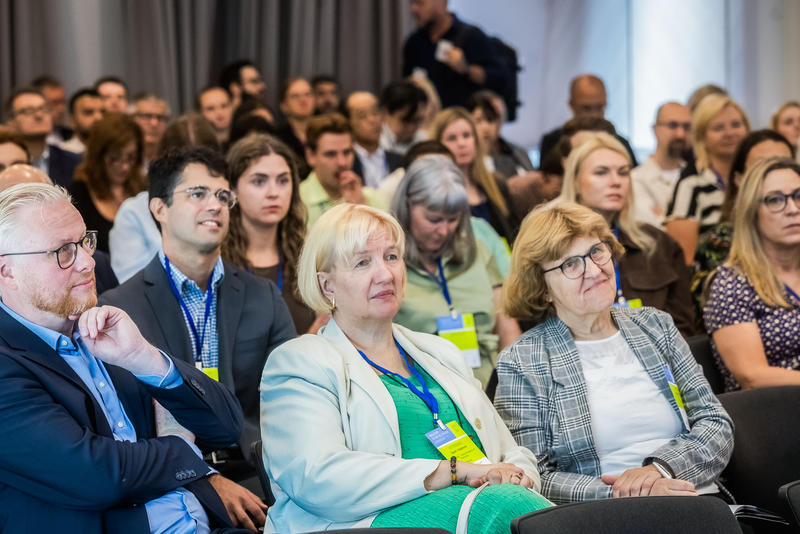
9th FLIP+ Annual Event
Vilnius 2026
Three days of member presentations, Working Group showcases, and community building. Theme: Assessing Tomorrow’s Learning — Collaborative Innovation in Action. Hosted by the National Agency for Education of Lithuania.