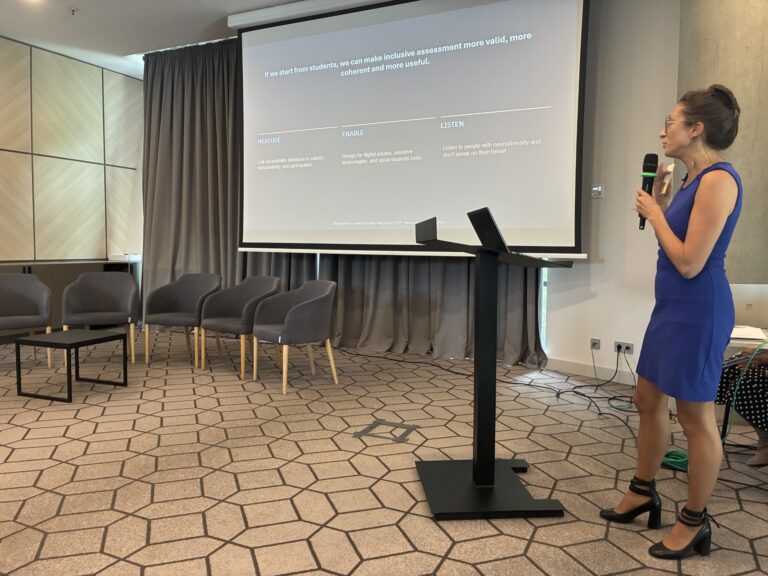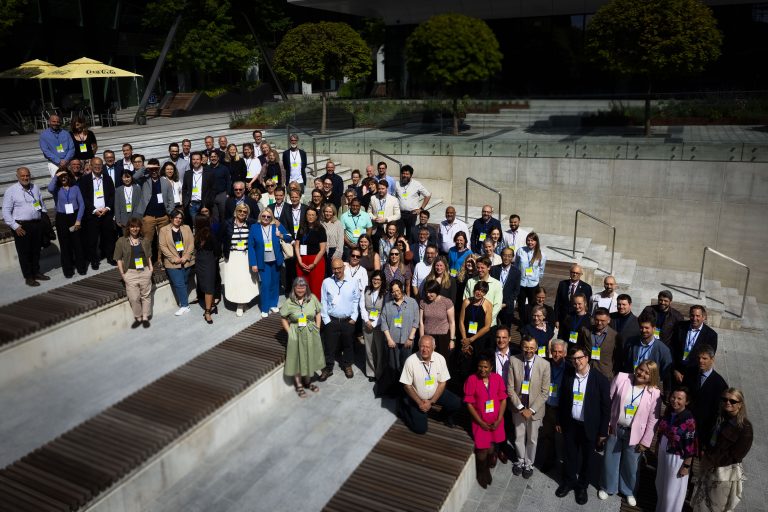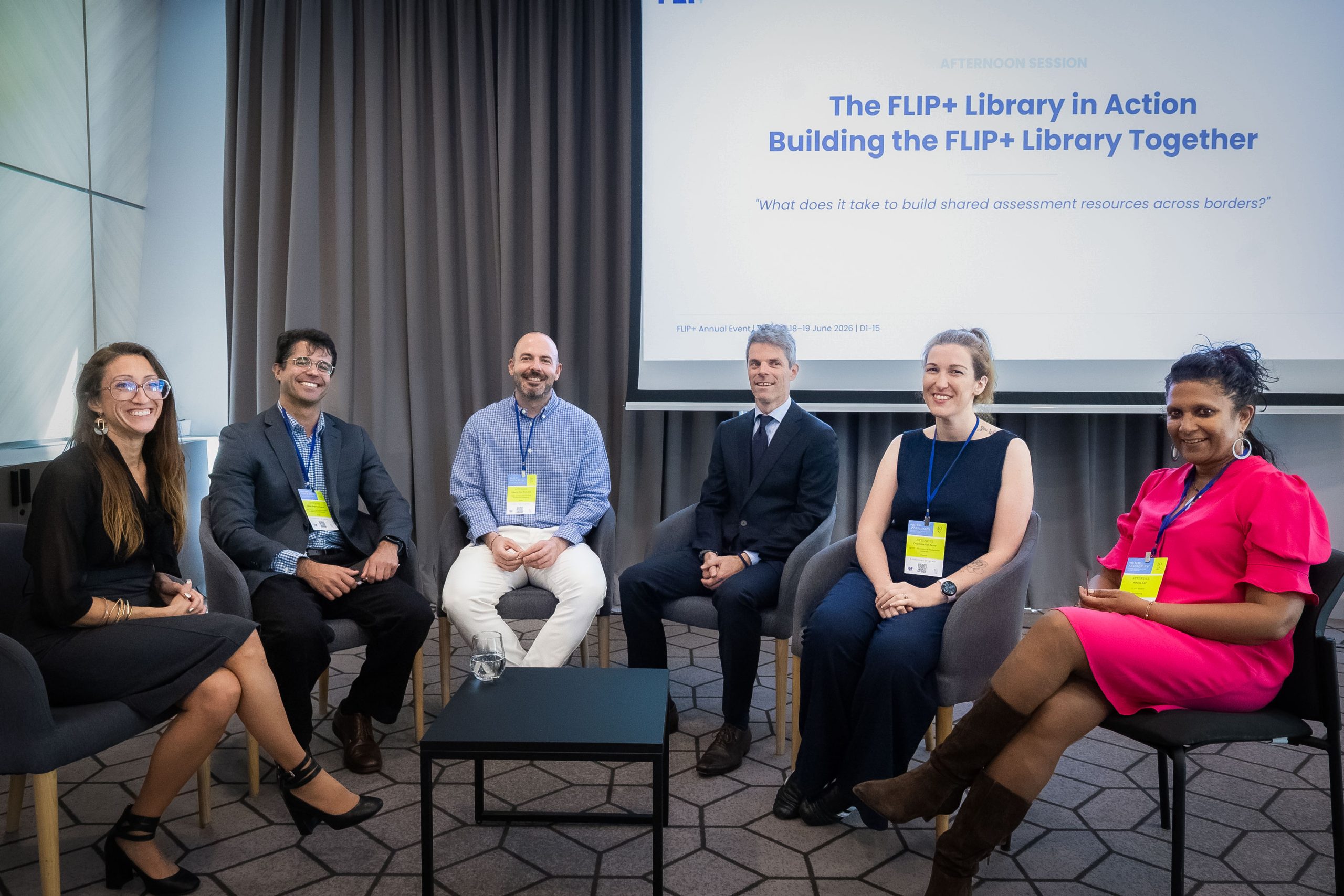
The FLIP+ Annual Event happens once a year. The work that fills it happens all year long — in the FLIP+ Working Groups.
Seven groups now meet regularly, across time zones and languages, to build the shared foundations of the FLIP+ Library:
- Mathematics and English: developing assessment content and aligning it to international frameworks
- Psychometrics: ensuring the validity and reliability of what the Library holds
- Accessibility & Inclusion: making sure assessment is designed for every learner, from the start
- FLIP+ Dev: building and maintaining the open-source platform
- AI in Assessment: exploring responsible AI in item development, translation, and quality
- AI & Data: our newest group, focused on the data that digital assessment generates and how it can improve learning
Each group is made up of colleagues from national institutions around the world, giving their time and expertise to something none of them could build alone.
One question, seven angles
As the FLIP+ Library grows, one question sits at the centre of everything: what does quality of the content actually mean?
It turns out there is no single answer. And that is the point.
For the Mathematics and English groups, quality is pedagogical: is this a good item for learning? For the Accessibility & Inclusion group, it is about fairness: can every learner engage with it? For Psychometrics, it is validity and reliability. For the AI in Assessment group, it is whether AI-assisted translation and processing can be trusted. For AI & Data, it is knowing what to measure to genuinely improve learning. For FLIP+ Dev, it is the experience of the person using the platform. And for Charlotte Gill-Sotty, the Library's Product Owner and a former teacher, it always comes back to one thing: does this deliver real value to the educator?
The FLIP+ Educational Hub — the growing home of the Library's tools and services — requires every one of these groups to contribute together. Quality, in FLIP+, is not defined by one discipline. It is defined by seven, in conversation.
The year ahead
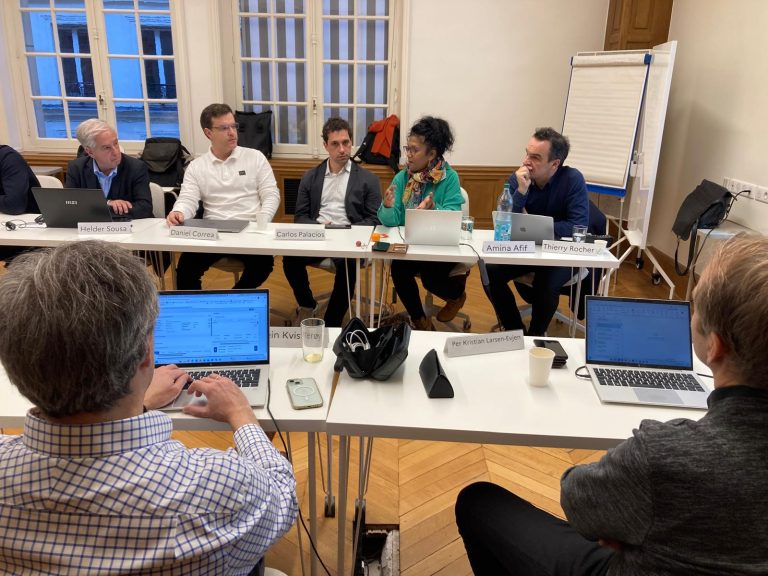
At the end of August 2026, the Working Group coordinators came together in Paris to reflect on a year of shared work and to shape the roadmap for 2026–2027. They looked at what each group has built, how the groups increasingly feed into one another, and where they want to go next.
It is patient, collaborative, often invisible work. And it is exactly why the FLIP+ Library is something no single institution could have built alone.
Interested in contributing your expertise? The FLIP+ Working Groups welcome new members. Follow us on LinkedIn or get in touch to find out how to take part.